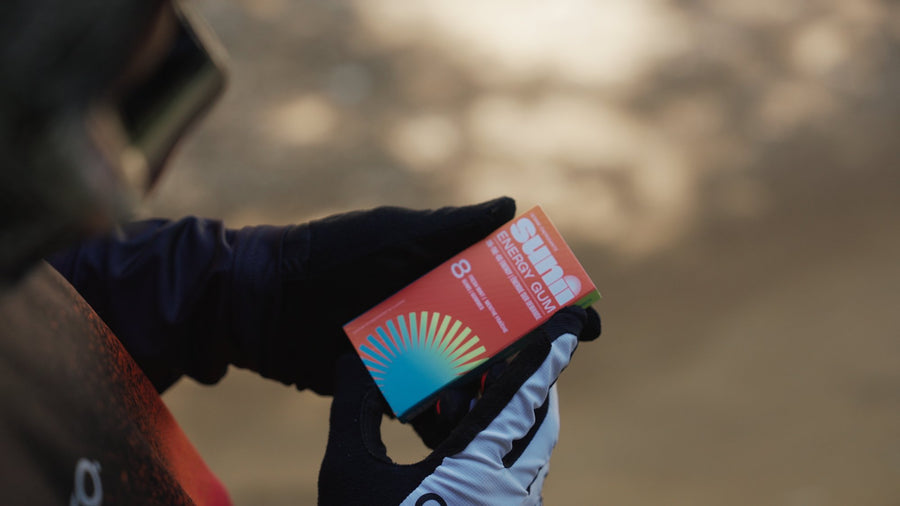
The short answer: On a 12-hour night shift, plan your caffeine for the first half of the night. Have one or two pieces of energy gum near the start of your shift and again before the early-morning slump, then stop about 8 hours before you plan to sleep. Start with 1 piece (50 mg) if you're sensitive to caffeine, and never use it in place of sleep.
I hear from a lot of nurses, security guards, warehouse crews and plant operators who reach for caffeine at 3 a.m. and then lie awake at 10 a.m. wondering why they can't sleep. Timing matters as much as the amount. Here's the plan we suggest for a typical 7 p.m. to 7 a.m. night.
Why is a 12-hour night shift so hard on your energy?
Your body runs on a 24-hour clock that expects you to be asleep at night. The Canadian Centre for Occupational Health and Safety (CCOHS) notes in its guide to rotational shiftwork that body temperature hits its lowest point in the early morning, around 4 a.m. or just before sunrise, and that daytime sleep is rarely as deep or refreshing as night sleep.
Twelve hours makes it harder. CCOHS's fatigue guidance points to research linking more than 16 hours awake, or less than 5 hours of sleep before work, with a higher chance of mistakes. On a long night, it's easy to hit both.
When should you chew energy gum on a night shift?
Think of caffeine as something you spend early, not something you save for the worst hour. Here's a sample plan for a 7 p.m. to 7 a.m. shift with sleep at about 8:30 a.m.:
| Time | What to do | Why |
|---|---|---|
| Before your shift (about 6 p.m.) | Nap if you can. Skip caffeine if you just woke up feeling rested. | Sleep is the real fuel. Caffeine works best on top of it, not instead of it. |
| Start of shift (7 to 8 p.m.) | 1 piece (50 mg) if you need it. | Most people feel it within 5-10 minutes, so it's easy to time around handover. |
| Before midnight (11 p.m. to 12:30 a.m.) | 1 more piece, or 2 if you're used to caffeine. | Gets you into the early-morning stretch while staying clear of your cut-off. |
| After your cut-off (about 12:30 a.m. onward) | No more caffeine. Use light, movement, cold water on your face, a light snack and your break. | Protects the daytime sleep you need for the next night. |
| End of shift (7 a.m.) | No caffeine. Wear sunglasses home and head straight to a dark room. | Your body needs the signal that it's time to sleep. |
Adjust the times to your own schedule. If you sleep at noon, everything shifts later.
What is a good caffeine cut-off for night shift workers?
CCOHS's fatigue page suggests avoiding caffeine for up to 8 hours before bed. For night workers, that means counting back from your planned morning bedtime, not from midnight.
The cut-off is personal. Some people can have caffeine closer to sleep and still rest well; others feel it much longer. If your daytime sleep is short or broken, move your last piece earlier before you add more. That's also where gum helps: one piece is a small, measured 50 mg, so it's easier to keep track than with a large coffee or a can.
How much caffeine is too much on a night shift?
Health Canada's caffeine guidance sets 400 mg a day as the maximum for healthy adults, and 300 mg for people who are pregnant, breastfeeding or planning a pregnancy. The US FDA uses the same 400 mg figure for most adults and lists jitters, a racing heart, upset stomach and trouble sleeping as signs you've had too much.
On a 12-hour night, most people need far less than that. Two to four pieces of Sunii (100 to 200 mg) across the first half of the shift is plenty for many people. The label maximum is 8 pieces (400 mg) a day, and if you get anywhere near that, skip every other source of caffeine. For more detail, read our post on how much caffeine is too much.
Does caffeine actually help shift workers?
A Cochrane review of caffeine in shift workers found that caffeine can reduce errors and improve thinking performance compared with no caffeine. The reviewers also flagged real limits: few trials, mostly young volunteers in simulated conditions, and no trials that measured injuries. Their takeaway was that healthy shift workers already using caffeine within recommended amounts have no reason to stop. In other words, caffeine is a tool, used wisely, alongside sleep and breaks.
Is energy gum better than coffee or energy drinks on nights?
It depends on what you need. Here's how they compare on the things night workers tell us matter:
- Dose control: each piece of Sunii is 50 mg, about 1/2 cup of coffee, so you can add a little at a time instead of committing to a full cup or can.
- Speed: Sunii is absorbed through the lining of the mouth while you chew, and most people feel it within 5-10 minutes. Our post on why energy gum works faster than coffee explains how.
- Sugar: Sunii is sugar-free with 0 calories per piece (Canadian label), which matters when the break room is full of pop and candy.
- Practical: no fridge, no spills, no bathroom run in the middle of a med pass or a pallet count. A pack of 8 fits in a scrubs or vest pocket.
Pick one source per shift. If you're chewing Sunii, skip the coffee and energy drinks that night.
What else helps you stay alert on nights?
- Sleep first. Protect a dark, quiet, cool room for daytime sleep. Blackout blinds and "do not disturb" settings make a big difference.
- Eat light. CCOHS suggests light meals through the shift and avoiding greasy food at night. Nuts, crackers and fruit beat vending machine candy.
- Use your breaks. A short nap on break, where your workplace allows it, does what caffeine can't.
- Rest between stretches. CCOHS recommends at least 24 hours of rest after a set of night shifts.
- Plan the drive home. If you're struggling to keep your eyes open after a night, don't drive. Get a ride or rest first.
Who should skip caffeine gum?
Sunii is not for children. If you're pregnant or breastfeeding, talk to your practitioner before using it. Check with a health care practitioner first if you take lithium or have high blood pressure, glaucoma or an overactive bladder. Don't combine it with other caffeine or stimulant products, and remember that it is not a substitute for sleep. Our FAQ covers more common questions.
Quick facts about Sunii
- 50 mg of caffeine per piece (total, including caffeine from guarana), about 1/2 cup of coffee.
- Most people feel it within 5-10 minutes, absorbed through the lining of the mouth while you chew.
- 8 pieces per pack. 1 piece if you're sensitive to caffeine, 2 if you're used to it. Maximum 8 pieces (400 mg) a day; at that amount, skip other caffeine.
- Each piece also has 50 mg taurine, 15 mg vitamin B6 and 15 mg vitamin B5.
- Fresh mint. Sugar-free, gluten-free and vegan. 0 calories per piece (Canadian label).
- Founded in Whistler and made in Langley, BC. Family-owned.
See the full label on our Sunii facts page.
Working nights this week? Try the Sunii 3-pack trial for $18.99, with free shipping on every order. You can also find Sunii at Circle K and other stores across Canada and the US using our store locator.
Last reviewed: November 5, 2026